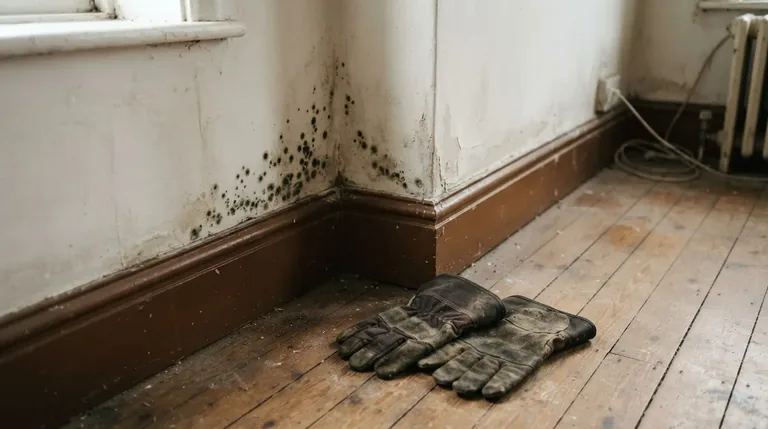
Mold After Water Damage in Collierville, TN: What to Do
FEMA says items holding moisture can develop mold within 24 to 48 hours. Tennessee has no separate state mold license, so ask any provider what license the job requires.
Who to Call First in ColliervilleHow Soon Mold Can Appear in a Collierville Home
Federal agencies give mold timing in their own words. According to FEMA, wet items holding moisture "can develop mold within 24 to 48 hours." EPA's mold course puts it this way: "In most cases, mold will not grow if wet or damp items are dried within 24-48 hours." CDC advises drying out fully and quickly within 24-48 hours after a flood.
| Agency | What it says | Checked |
|---|---|---|
| FEMA (Ready.gov) | "Wet carpeting, furniture, bedding and any other items holding moisture can develop mold within 24 to 48 hours." | Checked: September 2026 |
| EPA | "In most cases, mold will not grow if wet or damp items are dried within 24-48 hours." | Checked: September 2026 |
| CDC | Advises cleaning up and drying out the home fully and quickly, within 24-48 hours, after a flood. | Checked: September 2026 |
How long drying takes in a given house depends on the materials, the type of water and the moisture hidden inside walls and floors. Ask a provider what moisture readings it will take rather than relying on a general number.
Sources: FEMA's Spring Flood Fact Sheet, EPA's mold course, chapter 4, and CDC's mold and health page.
When Sewage or Floodwater Was Involved
Mold is only part of the risk when the water was sewage or floodwater. FEMA tells people to keep floodwater-contaminated materials separate and to use protective clothing, and FEMA/Ready.gov guidance advises that people with asthma, lung disease or a suppressed immune system should not enter buildings with visible or suspected mold.
- A sewer backup or a water line problem outside your walls starts with a call to the Town; see who to call first in Collierville.
- Keep children, pets and anyone without protection away from sewage and floodwater.
- Do not wade into contaminated water.
- Restoration practice treats sewage and rising floodwater as heavily contaminated, so a professional assessment is appropriate before anyone starts removing materials.
Mold Testing: What Health Agencies Say
Tennessee Department of Health guidance does not recommend routine mold testing as a first step, and CDC and EPA guidance is similar. The health agencies' advice is to fix the moisture problem and clean or remove visible mold. No national standard defines a safe amount of mold in a home.
- Tennessee Department of Health: does not test homes for mold.
- CDC and EPA: routine testing is not recommended as the first step.
- National standards: none define a safe level of mold indoors.
- What the agencies say to do instead: fix the moisture problem, then clean or remove visible mold.
- If a provider proposes testing anyway, ask what decision the results would change before you agree to pay for it.
Insurance rules that apply once mold is part of a claim are summarized in the Tennessee claim rules in the Collierville guide.
Handling Mold-Contaminated Materials Safely
EPA says unsalvageable mold-contaminated materials should be double-bagged in polyethylene bags at least 6 mil thick. Do not take on work that puts you at risk of mold exposure, or of structural or electrical injury. A restoration provider can take on larger or more contaminated jobs. Keep children and pets out of the affected area.
- EPA: double-bag unsalvageable mold-contaminated materials in polyethylene bags at least 6 mil thick.
- FEMA: keep floodwater-contaminated materials separate and use protective clothing.
- Ask the provider to explain how it plans to handle the mold work in your Collierville home.
If the moisture came from above, see ceiling leak water damage in Collierville for the first steps.

License and Permit Questions for Mold Work
Tennessee does not issue a separate state license to mold assessors or remediators. A contractor license still applies by project size: the Town of Collierville says residential projects that exceed $3,000 need a properly licensed contractor, and the State sets the license type by the cost of the project.
- Collierville's Building & Codes page lists a state home improvement contractor license for residential projects between $3,000 and $25,000 and a state general contractor license for projects exceeding $25,000.
- State of Tennessee: Tennessee requires a contractor license when acting as a prime contractor on projects costing $25,000 or more. In Shelby County, a home improvement license is required for residential remodeling projects costing $3,000–$24,999. See the State's home improvement license page.
- Permit questions go to the Town's Building & Codes Division at 901-457-2310.
- The Town lists its Building Official at 901-457-2320.
- Ask any provider for proof of insurance and any trade license the job requires, and for an itemized written estimate that shows what each line covers.
The Collierville water damage guide and the ceiling leak page cover related steps.
Documenting Mold and Talking to Your Insurer
Photographs and receipts help if mold becomes part of a claim. TDCI and the Red Cross both recommend documenting damage, and TDCI advises telling your insurer promptly. How your policy treats mold depends on its wording, so ask the insurer what applies to your loss instead of assuming.
- Photograph and video the source of the water, the wet materials and any visible mold before cleanup, when it is safe.
- Keep receipts for temporary repairs and any provider's estimate.
- Under Tennessee rule 0780-01-05-.08, within 60 days after receiving properly completed and executed proofs of loss, the insurer must accept, deny or notify you that more investigation is needed.
- Standard homeowners policies typically exclude flood and backed-up drains or sewers, according to TDCI guidance; your policy wording controls.
This is general information, not legal or insurance advice. TDCI takes consumer questions about insurance policies at 615-741-2218 or 800-342-4029.
If That Did Not Work
If you cannot tell whether mold is growing, or a provider's answers do not settle it, you still have three exits: try again, try another route, or contact an agency. Ask each provider or office what to do while you wait, and keep the affected area protected and out of use.
- Try again: ask the provider what moisture readings it took and what they show, and ask a second provider that serves your ZIP code for its own assessment.
- Try another route: for people with asthma, lung disease or a suppressed immune system, keep them out of the area, as FEMA/Ready.gov guidance advises for buildings with visible or suspected mold.
- Who to contact: for the Town's permit and code questions, Building & Codes at 901-457-2310; for a dispute with your insurer, TDCI at 615-741-2218 or 800-342-4029.
Frequently Asked Questions
How soon can mold start growing on wet materials?
Should I test my home for mold after a leak?
Does Tennessee require a license for mold work?
Who should stay out of a room with mold?
How should I bag moldy debris?
Does mold from sewage or floodwater need different handling?
Water in your home right now?
See who to call first in Collierville, how to reach your water provider, and how to check your flood zone.
Who to Call First in Collierville